Christos Marintsis Library

A private collection of philosophy, theology, and rare texts


Additional_info Author:   Vladimir Jankélévitch
Jnakélévitch
Title: 

Une vie en toutes lettres ( lettres a Louis Beauduc 1923-1980 )

Author: Vladimir Jankélévitch

Cover van Une vie en toutes lettres ( lettres a Louis Beauduc 1923-1980 ) Info over Une vie en toutes lettres ( lettres a Louis Beauduc 1923-1980 )

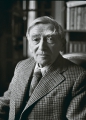
Vladimir Jankélévitch (1903–1985) was a French philosopher and musicologist known for his deeply nuanced reflections on morality, time, and the ineffable aspects of human experience. Who he was Born in Bourges, France, Jankélévitch was the son of Russian-Jewish immigrants. He studied philosophy at the prestigious École Normale Supérieure and later became a professor at the University of Paris. He also participated in the French Resistance during World War II, which influenced his moral philosophy—especially his thoughts on forgiveness and justice. Key philosophical ideas 1. The “I don’t know what” (Je-ne-sais-quoi) Jankélévitch explored subtle, almost indescribable qualities in art, love, and existence—those fleeting moments that can’t quite be put into words. 2. The ineffable (l’ineffable) He believed some truths—especially in music and emotion—cannot be fully expressed through language, only experienced. 3. Time and the present moment He emphasized the fleeting nature of time and the importance of the present, often describing life as something that vanishes as we try to grasp it. 4. Morality and forgiveness After World War II, he famously argued that certain crimes (like those of the Holocaust) are “unforgivable”, a controversial stance that contrasts with more universal theories of forgiveness. Music and aesthetics Jankélévitch had a deep love for music, especially composers like Claude Debussy and Gabriel Fauré. He wrote extensively on how music expresses what words cannot—making it central to his philosophy of the ineffable. Notable works Le Je-ne-sais-quoi et le presque-rien (The “I-don’t-know-what” and the “almost-nothing”) La Mort (Death) Le Pardon (Forgiveness) L’Irréversible et la nostalgie (The Irreversible and Nostalgia)

Vladimir Jankélévitch (1903–1985) was a French philosopher and musicologist known for his deeply nuanced reflections on morality, time, and the ineffable aspects of human experience. Who he was Born in Bourges, France, Jankélévitch was the son of Russian-Jewish immigrants. He studied philosophy at the prestigious École Normale Supérieure and later became a professor at the University of Paris. He also participated in the French Resistance during World War II, which influenced his moral philosophy—especially his thoughts on forgiveness and justice. Key philosophical ideas 1. The “I don’t know what” (Je-ne-sais-quoi) Jankélévitch explored subtle, almost indescribable qualities in art, love, and existence—those fleeting moments that can’t quite be put into words. 2. The ineffable (l’ineffable) He believed some truths—especially in music and emotion—cannot be fully expressed through language, only experienced. 3. Time and the present moment He emphasized the fleeting nature of time and the importance of the present, often describing life as something that vanishes as we try to grasp it. 4. Morality and forgiveness After World War II, he famously argued that certain crimes (like those of the Holocaust) are “unforgivable”, a controversial stance that contrasts with more universal theories of forgiveness. Music and aesthetics Jankélévitch had a deep love for music, especially composers like Claude Debussy and Gabriel Fauré. He wrote extensively on how music expresses what words cannot—making it central to his philosophy of the ineffable. Notable works Le Je-ne-sais-quoi et le presque-rien (The “I-don’t-know-what” and the “almost-nothing”) La Mort (Death) Le Pardon (Forgiveness) L’Irréversible et la nostalgie (The Irreversible and Nostalgia)